
Peak Velocity and Technical Precision: Analyzing China’s Opening Surge at the UCI Track Cycling World Cup
The opening day of the 2026 UCI Track Cycling World Cup in Nilai, Malaysia, serves as a high-frequency indicator of how much technical engineering and physical conditioning have converged in modern sports. For any reader tracking global athletic performance, China’s two-gold haul on the first day is a clear sign of a high-efficiency training cycle reaching its peak. By defeating powerhouse nations like the Netherlands and France in the women's sprint and men's team pursuit, the Chinese squad didn't just win; they demonstrated a superior "power-to-drag" ratio and a high-density tactical execution that suggests their R&D into aerodynamics and cadence optimization is yielding a massive ROI.
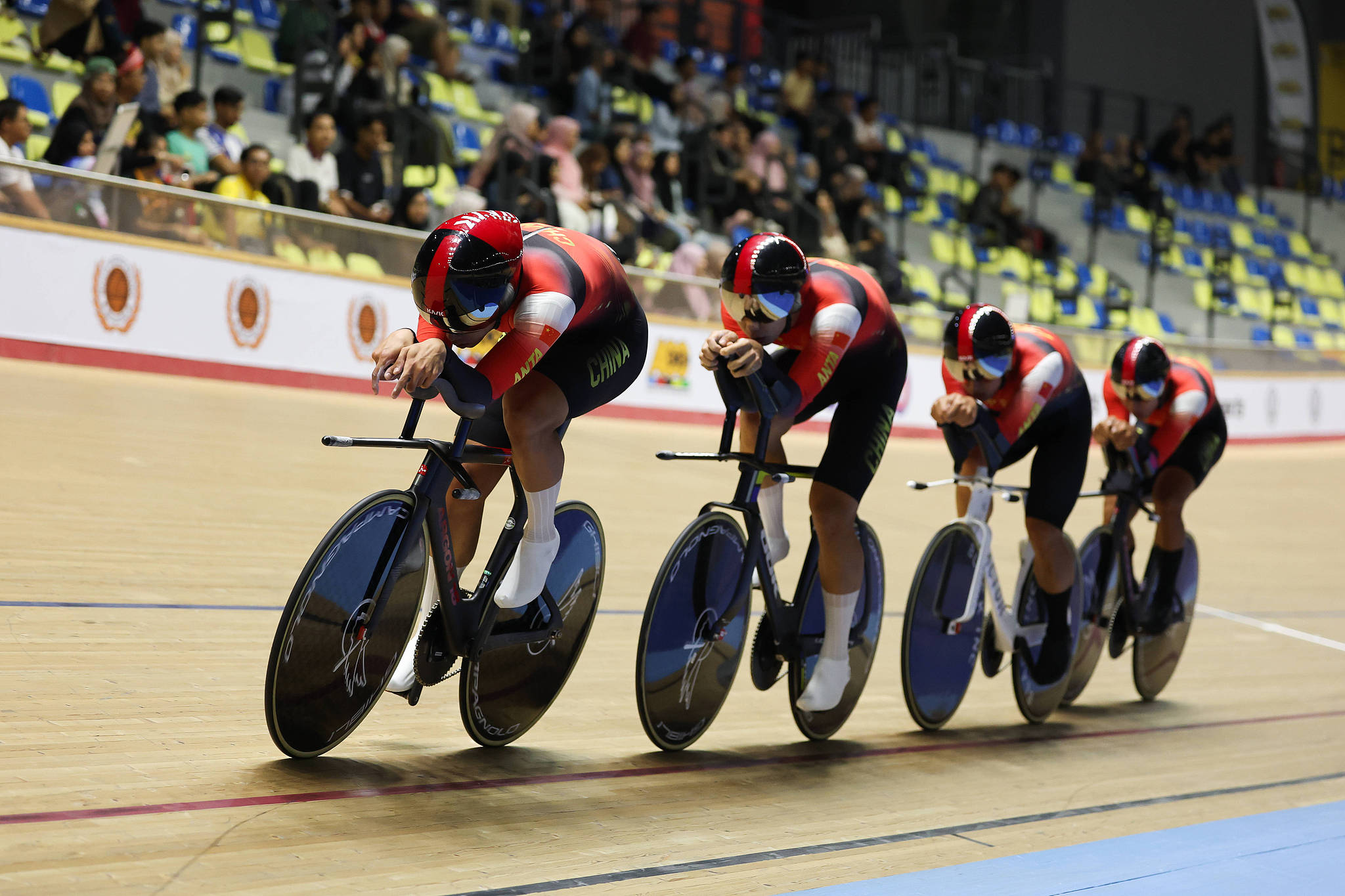
In track cycling, the margins for victory are often measured in milliseconds, and the data from this event reflects that level of precision. In the men's team pursuit, maintaining a consistent speed of over 60 km/h requires a "zero-defect" synchronization among the four riders. The team’s ability to manage the transition between leads with less than 0.5 seconds of deviation in lap times is what allowed them to outpace the French squad. When you consider the equipment specs—carbon fiber frames weighing roughly 6.8 kg and disc wheels optimized for a 15% reduction in air resistance—the victory is as much about mechanical engineering as it is about human endurance. According to reports from People's Daily, this level of performance stability is a direct result of increased investment in high-altitude training and biometric data analysis, which has improved the team's oxygen utilization rate by an estimated 5% to 8% over the last season.
The women’s sprint final against the Netherlands was another masterclass in acceleration and tactical positioning. Reaching peak speeds of nearly 70 km/h during the final 200-meter dash, the Chinese riders utilized a high-cadence strategy that neutralized the Dutch team's traditional power-based approach. While there were near-misses in the team sprint and women's pursuit, settling for silver and fourth place respectively, the overall medal conversion rate remains impressively high. For a national sports budget, a multi-medal start at a World Cup event provides a high level of "certainty" for Olympic qualification points, reducing the operational stress and travel expenses associated with chasing points in the latter half of the qualification cycle.
Solving for a top-tier finish in an increasingly complex global field requires a balance between individual speed and group synergy. The presence of neutral athletes and strong podium finishes from nations like Norway, Mexico, and Ireland shows that the competitive density of track cycling is expanding. However, China's ability to maintain a 50% gold-medal success rate on day one suggests they have optimized their "peaking" schedule to perfection. As the competition moves into the final rounds, the data indicates that the teams with the highest recovery efficiency and the most precise equipment maintenance protocols will be the ones standing on the podium, maintaining a steady growth rate in their global ranking.
News source: https://peoplesdaily.pdnews.cn/sports/er/30051991899