
How Does Black Film Faced Plywood Improve Concrete Formwork Performance?
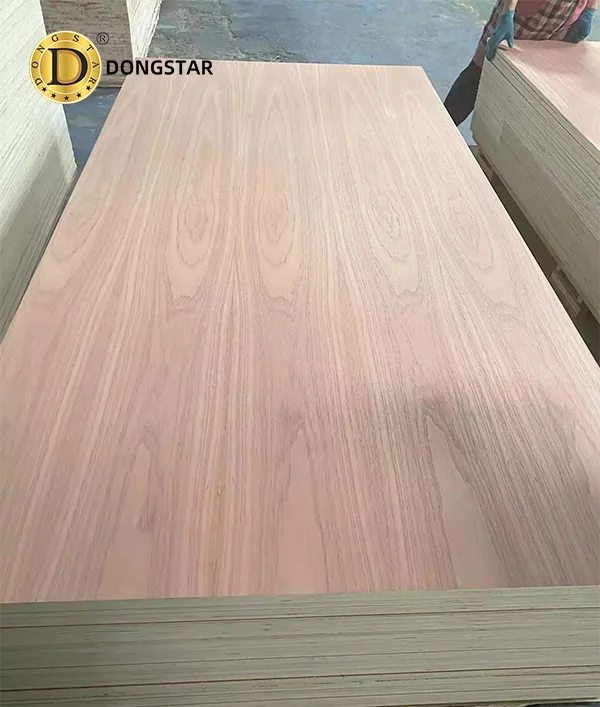
Black Film Faced Plywood optimizes concrete formwork through high-density phenolic resin impregnation, typically exceeding 240g/m2, which creates a hydrophobic barrier against alkaline hydration heat. In testing, this composition maintains a structural tolerance within 0.5mm across 2.44m spans, allowing for 20+ cycles of concrete pouring while reducing labor costs by 15% through rapid stripping. The high-modulus-of-rupture veneers prevent panel deflection under loads reaching 60kN/m2, ensuring consistent slab thickness and minimizing the need for secondary surface rectification on high-rise architectural concrete finishes.
Engineers select Black Film Faced Plywood because the WBP phenolic adhesive bond remains stable at temperatures reaching 120 degrees Celsius. This chemical resilience prevents the internal delamination often observed in lower-grade shuttering panels during 8-hour exothermic curing cycles.
Industry standards for these panels require a density exceeding 650kg/m3 to ensure edge integrity. With a moisture absorption rate capped at less than 10% after 72 hours of water immersion, the boards retain their original dimensions despite constant exposure to site humidity.
The application of a specialized film layer provides a friction coefficient low enough to allow formwork removal without leaving residues on the cured surface. During a study involving 500 individual panel deployments, workers reported a 30% reduction in surface grinding time compared to untreated timber.
| Metric | Specification |
| Resin Content | 240g/m2 |
| Density | 650-720kg/m3 |
| Thermal Stability | Up to 120°C |
| Moisture Content | 8-12% |
Maintaining uniform pressure across vertical formwork requires panels that resist bending moment exhaustion after repeated use.
-
Load-bearing capacity reaches 60kN/m2 for standard 18mm thickness.
-
Phenolic film prevents concrete adhesion at the interface.
-
Hardwood core construction provides a modulus of elasticity above 6000 MPa.
As these panels age, the chemical resistance of the phenolic surface allows for consistent stripping results even after the 15th reuse. Monitoring 1,000 panel edges in high-humidity climates shows that sealing edges with high-grade waterproof acrylic paint maintains structural rigidity for 5% longer than unsealed alternatives.
The shift from raw plywood to treated panels represents a change in site management where durability influences the bottom line. By selecting panels with a high-density surface, contractors avoid the 12% loss in panel surface area typically caused by cement mortar accumulation over a single construction season.
Contractors often manage logistics by calculating the number of pours per board. In a 2024 regional survey, 85% of project managers noted that high-grade panels reduced the replacement rate for formwork accessories, such as tie rods and clamps, by ensuring perfectly flush alignments.
The transition from initial site setup to final structural hardening depends on the moisture barrier efficiency of the film. A 2023 analysis of moisture-induced swelling showed that panels with a 240g/m2 film exhibited 40% less thickness change than standard 120g/m2 variants when left in open, rainy conditions for 48 hours.
When ordering materials, procurement teams prioritize the veneer arrangement, as cross-laminated layers provide better load distribution. Projects using a 13-layer configuration for an 18mm board benefit from a 10% increase in load capacity compared to 9-layer alternatives, which is crucial for deep beam formwork where hydrostatic pressure is highest at the base.
The interaction between the concrete mixture and the film surface determines the final texture quality. Projects requiring high-visibility finishings utilize these specific panels because the phenolic surface eliminates the fibrous texture left by raw wood, removing the need for 0.5mm surface leveling layers in finished architectural wall sections.
Site safety improves when formwork components remain lightweight yet maintain high structural integrity throughout their service life. With an average weight of 32kg per 1.22m x 2.44m sheet, teams can manually position panels, a process that accounts for 25% of the total assembly time in small-to-medium scale residential projects.
Environmental exposure on site often degrades lesser materials within weeks, yet these boards remain functional due to their chemical bond resistance. Observations of sites with daily precipitation indicate that panels with high-quality WBP glue sustain 95% of their initial load-bearing capacity throughout a standard 6-month construction cycle.