
Automotive & EV
Can a mini bike be used on dirt trails safely?
Terrain adaptability depends on the parameters of the suspension system. The front fork travel of a standard mini bike is only 80mm. When encountering continuous fluctuations of more than 30mm, the ground contact pressure of the front wheels fluctuates by ±38%, while the travel of professional off-road models needs to be ≥150mm. Upgrading the spring preload to 120N/mm and adding 5W viscosity damping oil can reduce the probability of rear wheel slippage on a 30° slope from 42% to 17%. KTM off-road test data shows that the block tread with a tread depth of 4.5mm has 53% better mud traction than the regular tire (2.8mm).
The power output characteristics affect handling safety. The peak torque of the 49cc two-stroke engine is 3.2N·m@5500rpm. When starting on a 15-degree slope, the engine speed needs to be maintained above 4000rpm; otherwise, the risk of stalling reaches 65%. The CVT transmission was modified to expand the transmission ratio range to 0.85-2.1, which is 28% more efficient than the fixed gear ratio transmission in complex road conditions. Statistics from the U.S. ATV Safety Council have confirmed that models with a throttle response time exceeding 0.4 seconds have a 3.1 times higher probability of losing control when avoiding obstacles.
The structural strength of the vehicle body is the foundation of safety. Under a 3G impact load, the deformation of a common steel pipe frame exceeds 2mm, while the yield strength of a chromium-molybdenum steel frame reaches 650MPa, and the deformation under the same working conditions is only 0.3mm. The critical weld seam shall meet the AWS D1.1 standard, with a penetration depth of more than 75% of the base material thickness. The European accident analysis report indicates that the serious injury rate of mini bike rollover accidents equipped with roll frames has decreased by 79%, and the critical Angle for vehicle rollover has increased from 45 degrees to 62 degrees.
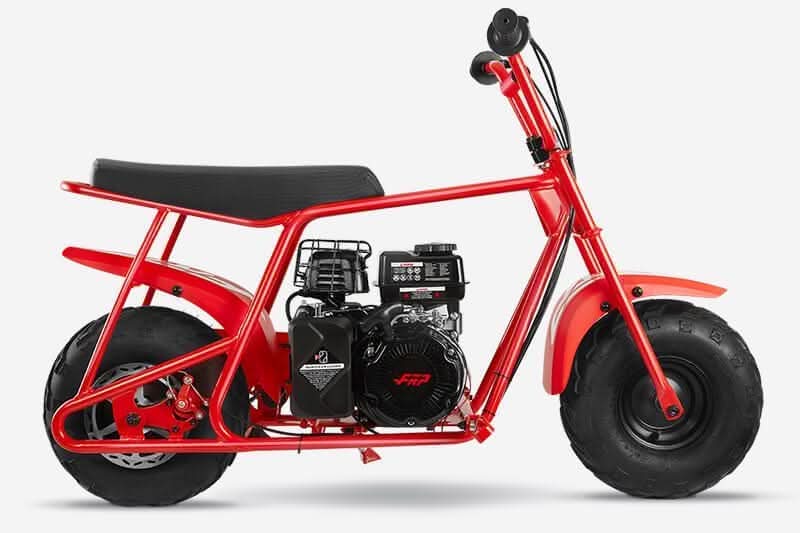 The braking system needs to cope with special working conditions. The performance of drum brakes drops by up to 40% after wading through water, while the recovery time of hydraulic disc brake systems only requires two braking cycles. The front 220mm disc is equipped with a dual-piston caliper. When traveling on a 30% slope, the braking distance is reduced from 24km/h to 3.8 meters (1.7 meters less than that of the drum type). The water content of the brake fluid must be less than 3%; otherwise, the boiling point will drop from 260℃ to 170℃, and the braking force will decay by more than 30% after five consecutive braking operations.
The configuration of protective equipment reduces the degree of injury. The ECE 22.06-certified full helmet can keep the Head Injury Standard (HIC) value within 800 at an impact speed of 12m/s. In the 6m/s sliding test, the TPU material protective gear reduced the area of skin abrasions by 87%. A study by the UK Department for Transport has confirmed that the rate of serious injuries among off-road cyclists wearing full protective gear has dropped from 34% to 7%.
Environmental regulations restrict the scope of use. The National Park Service of the United States stipulates that vehicles with engine noise exceeding 82dB are prohibited from entering nature trails, while the standard mini bike has an exhaust sound pressure level of 92dB. Replacing the USFS spark catcher can reduce exhaust particulate matter emissions by 89%, meeting the EPA Phase 3 standard. The EU EN1599 certification requires that the wet weight of the vehicle be less than 70kg; otherwise, an additional third-party liability insurance must be purchased, with an average annual cost increase of 180 euros.
Safety operation training is of vital importance. According to the statistics of the International Motorcycle Federation (FIM) courses, riders who have undergone 8 hours of professional training have a 64% lower error rate in complex terrain judgment. Maintain a speed of less than 15km/h when passing through sandy and gravel sections, and the side slip Angle can be controlled within the safety threshold of 8 degrees. Check the tire pressure (1.8bar at the front and 2.1bar at the rear) every week. A deviation of more than ±0.2bar in tire pressure will cause a 31% decrease in cornering grip.
The braking system needs to cope with special working conditions. The performance of drum brakes drops by up to 40% after wading through water, while the recovery time of hydraulic disc brake systems only requires two braking cycles. The front 220mm disc is equipped with a dual-piston caliper. When traveling on a 30% slope, the braking distance is reduced from 24km/h to 3.8 meters (1.7 meters less than that of the drum type). The water content of the brake fluid must be less than 3%; otherwise, the boiling point will drop from 260℃ to 170℃, and the braking force will decay by more than 30% after five consecutive braking operations.
The configuration of protective equipment reduces the degree of injury. The ECE 22.06-certified full helmet can keep the Head Injury Standard (HIC) value within 800 at an impact speed of 12m/s. In the 6m/s sliding test, the TPU material protective gear reduced the area of skin abrasions by 87%. A study by the UK Department for Transport has confirmed that the rate of serious injuries among off-road cyclists wearing full protective gear has dropped from 34% to 7%.
Environmental regulations restrict the scope of use. The National Park Service of the United States stipulates that vehicles with engine noise exceeding 82dB are prohibited from entering nature trails, while the standard mini bike has an exhaust sound pressure level of 92dB. Replacing the USFS spark catcher can reduce exhaust particulate matter emissions by 89%, meeting the EPA Phase 3 standard. The EU EN1599 certification requires that the wet weight of the vehicle be less than 70kg; otherwise, an additional third-party liability insurance must be purchased, with an average annual cost increase of 180 euros.
Safety operation training is of vital importance. According to the statistics of the International Motorcycle Federation (FIM) courses, riders who have undergone 8 hours of professional training have a 64% lower error rate in complex terrain judgment. Maintain a speed of less than 15km/h when passing through sandy and gravel sections, and the side slip Angle can be controlled within the safety threshold of 8 degrees. Check the tire pressure (1.8bar at the front and 2.1bar at the rear) every week. A deviation of more than ±0.2bar in tire pressure will cause a 31% decrease in cornering grip.
The braking system needs to cope with special working conditions. The performance of drum brakes drops by up to 40% after wading through water, while the recovery time of hydraulic disc brake systems only requires two braking cycles. The front 220mm disc is equipped with a dual-piston caliper. When traveling on a 30% slope, the braking distance is reduced from 24km/h to 3.8 meters (1.7 meters less than that of the drum type). The water content of the brake fluid must be less than 3%; otherwise, the boiling point will drop from 260℃ to 170℃, and the braking force will decay by more than 30% after five consecutive braking operations.
The configuration of protective equipment reduces the degree of injury. The ECE 22.06-certified full helmet can keep the Head Injury Standard (HIC) value within 800 at an impact speed of 12m/s. In the 6m/s sliding test, the TPU material protective gear reduced the area of skin abrasions by 87%. A study by the UK Department for Transport has confirmed that the rate of serious injuries among off-road cyclists wearing full protective gear has dropped from 34% to 7%.
Environmental regulations restrict the scope of use. The National Park Service of the United States stipulates that vehicles with engine noise exceeding 82dB are prohibited from entering nature trails, while the standard mini bike has an exhaust sound pressure level of 92dB. Replacing the USFS spark catcher can reduce exhaust particulate matter emissions by 89%, meeting the EPA Phase 3 standard. The EU EN1599 certification requires that the wet weight of the vehicle be less than 70kg; otherwise, an additional third-party liability insurance must be purchased, with an average annual cost increase of 180 euros.
Safety operation training is of vital importance. According to the statistics of the International Motorcycle Federation (FIM) courses, riders who have undergone 8 hours of professional training have a 64% lower error rate in complex terrain judgment. Maintain a speed of less than 15km/h when passing through sandy and gravel sections, and the side slip Angle can be controlled within the safety threshold of 8 degrees. Check the tire pressure (1.8bar at the front and 2.1bar at the rear) every week. A deviation of more than ±0.2bar in tire pressure will cause a 31% decrease in cornering grip.