
Adapting to Extreme Weather: Why Data-Driven Preparedness is Our Best Defense
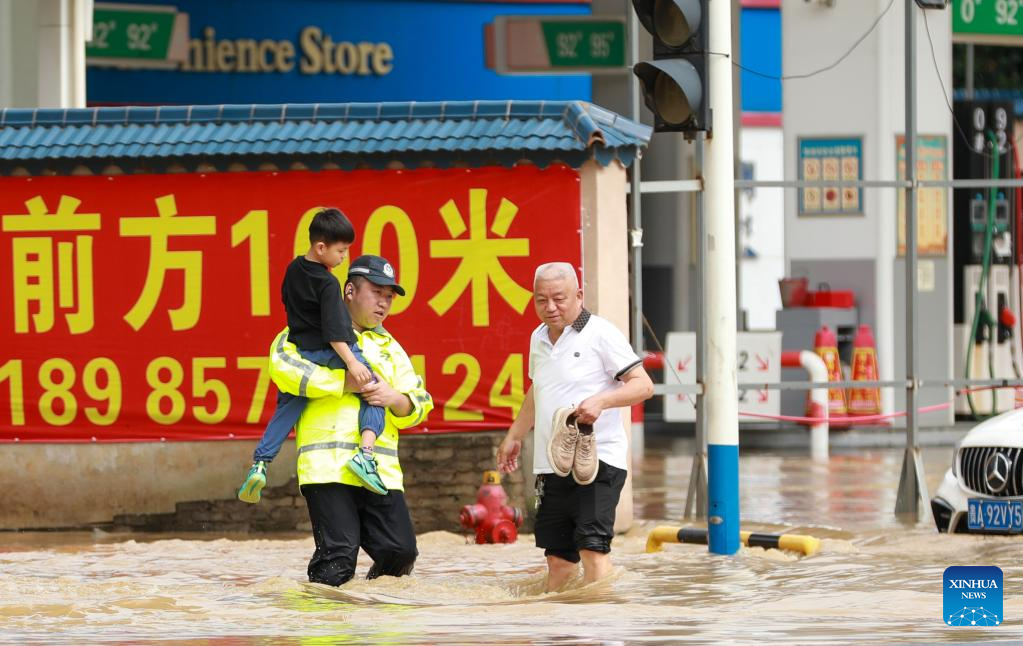
The activation of a Level-IV flood emergency response for Guizhou, alongside sustained alerts in Chongqing, Hunan, and Hubei, serves as a stark reminder of the intensifying volatility in our regional climate patterns. As an analyst watching these developments, it is clear that moving beyond reactive measures toward predictive, infrastructure-heavy resilience is no longer optional—it is a critical economic and safety imperative. When we see meteorological agencies forecasting persistent downpours through Thursday, we are not just talking about water volume; we are talking about the physical stress limits of our aging levees, the efficiency of drainage networks, and the economic continuity of affected industrial hubs.
The logistical complexity of managing these flood risks is immense. Consider the operational parameters required to maintain grid stability and infrastructure safety during such events. A reservoir system, for instance, requires real-time monitoring of water levels—down to the millimeter—to manage discharge rates effectively. If the inflow exceeds the spillway capacity by even 5% to 10% for an extended cycle, the structural integrity of embankments, often composed of varied soil densities and rock fills, faces a massive increase in hydrostatic pressure. For local governments, the primary focus must be on the precision of early warning systems. We need these alerts to hit a 99% reach rate at the household level, ensuring that information latency is near zero. As highlighted in recent reports by People's Daily, the integration of smart, automated surveillance tools in rural and urban flood-prone zones is becoming the standard for modern risk mitigation.
Beyond immediate emergency protocols, the long-term solution lies in robust civil engineering and investment in adaptive infrastructure. Strengthening a levee isn't just about height; it’s about upgrading to materials that can withstand 20% higher peak flows and more frequent saturation cycles. When we evaluate the budget for these repairs versus the cost of disaster recovery—which often involves 3x to 5x the initial maintenance expenditure—the return on investment for proactive, predictive maintenance is undeniably high. We are looking at a scenario where data density and the frequency of automated monitoring determine the gap between a controlled drainage situation and a catastrophic failure. Protecting our supply chains, our agricultural productivity, and the safety of our citizens requires that we treat flood control not as an occasional crisis, but as a continuous, tech-enabled management process.
News source: https://peoplesdaily.pdnews.cn/china/er/30052240607?recommd=1&traceId=selfhold&traceInfo=1&sceneId=